Semi-Precious Gemstones
While the world of semi-precious gemstones is vast and diverse, we believe in mastery over variety. At Trusty Overseas Transit, we have chosen to focus our semi-precious expertise exclusively on Opals.
As specialists in phenomenal stones, we prioritize Australian varieties—the global benchmark for opal quality and stability
Because Opals are complex stones, meaning they require a specialized understanding of light diffraction and delicate lapidary work—we dedicate our full resources to sourcing and refining them to the highest standard. By narrowing our focus, we ensure that every Opal in our collection exhibits the superior "Play-of-Color" and structural integrity that our clients expect from a premier supply house.
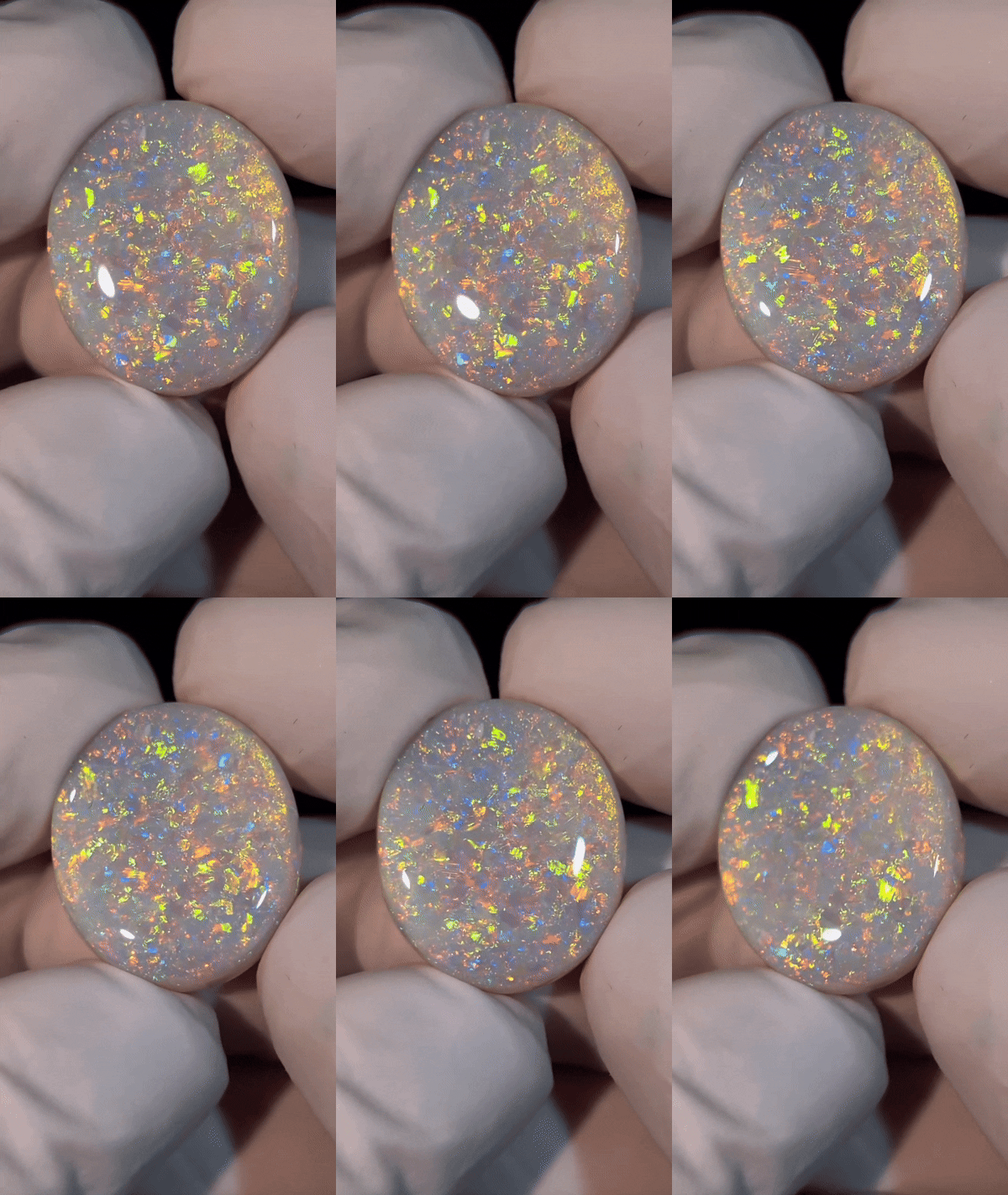
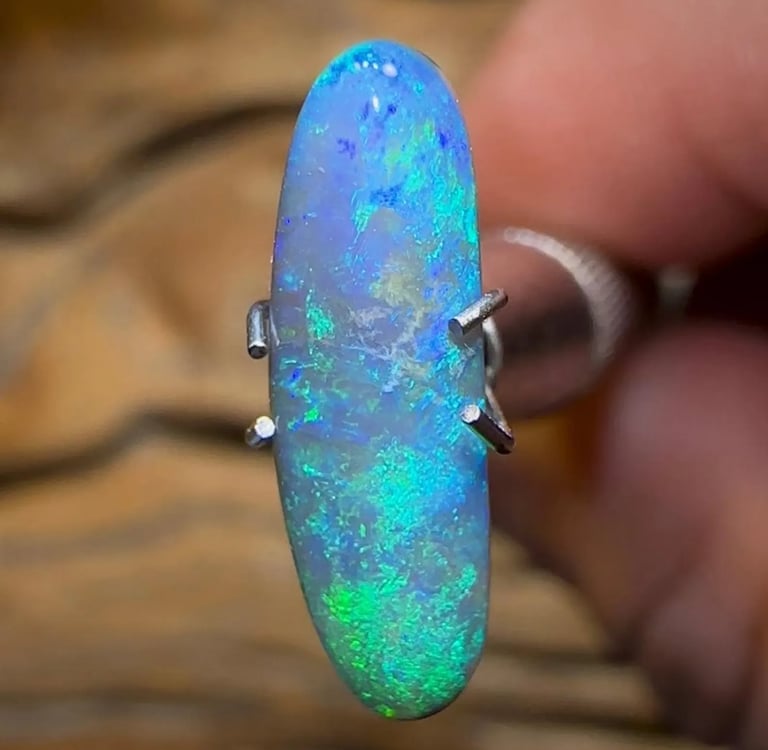
Black Opal
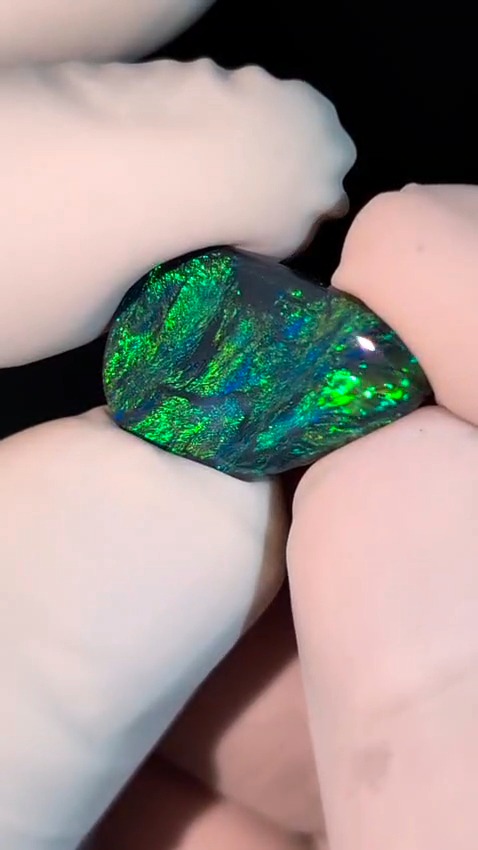
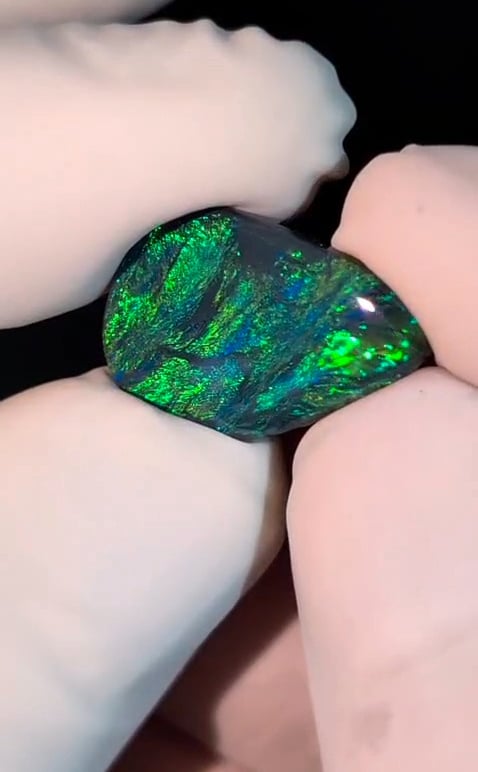
The rarest and most esteemed variety, characterized by a dark gray to jet-black body tone. This dark background acts as a canvas that allows spectral flashes of red, green, and violet to appear with maximum intensity.
Why it forms differently ? Black Opals form in the presence of carbon and iron oxide trace elements in the surrounding sediment. During the formation process, these elements are trapped within the silica structure, creating the naturally dark "potch" (common opal) that sits behind the precious opal layer.
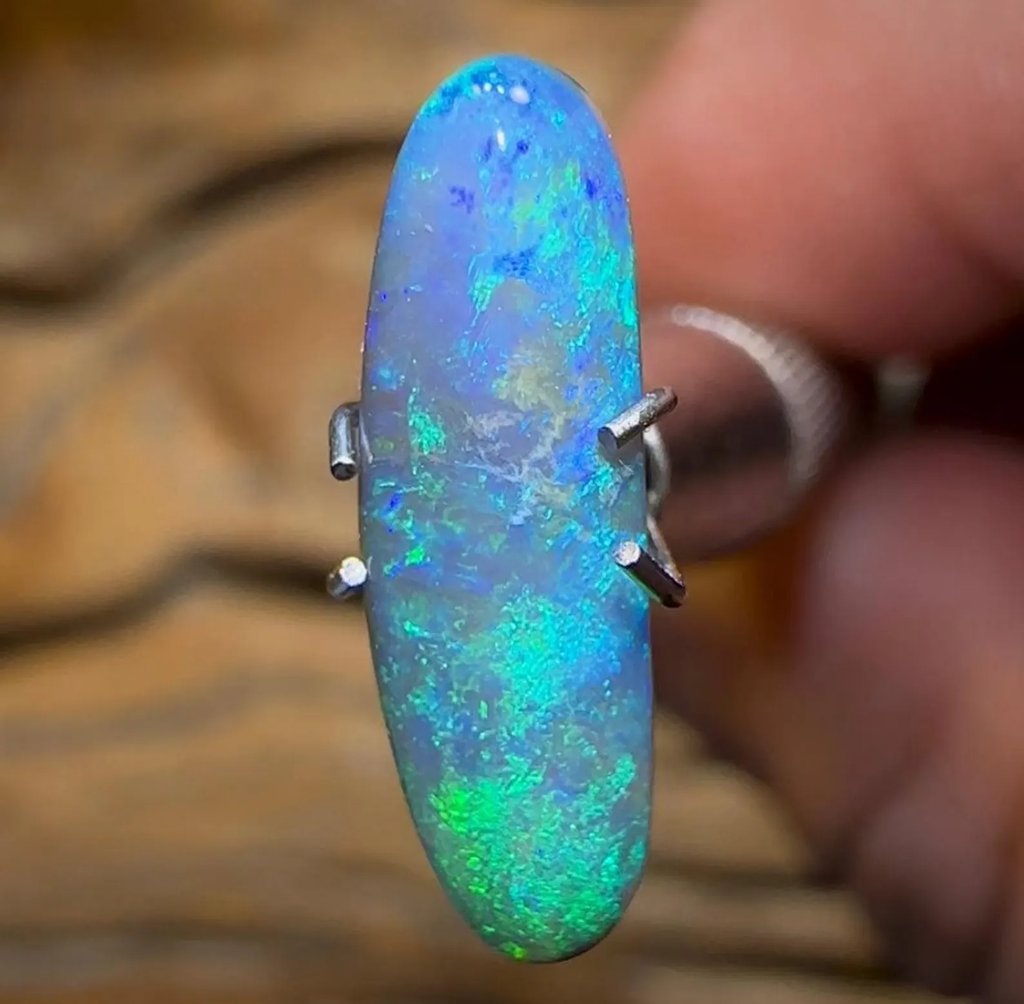
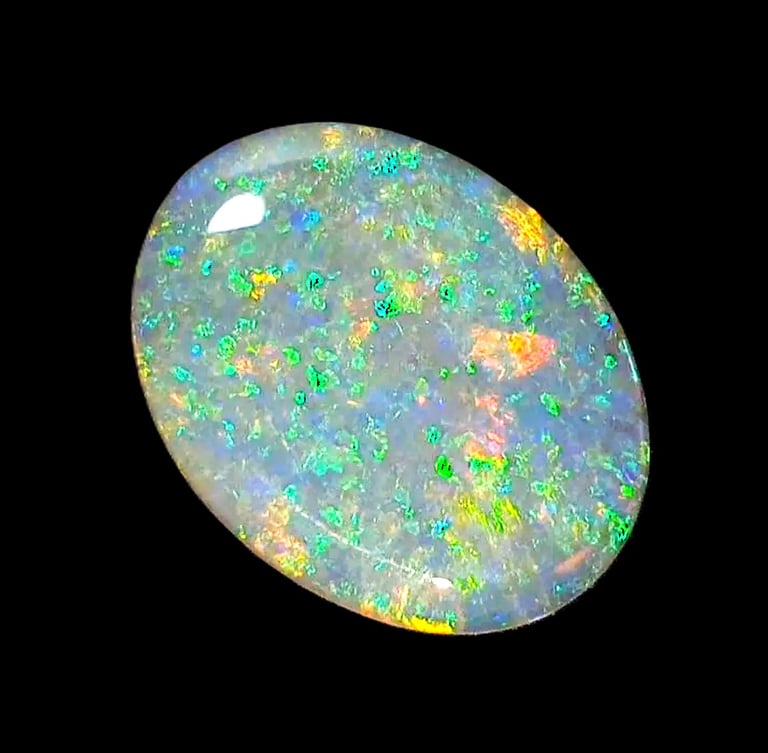
Light Opal
A classic variety featuring a white, milky, or pale gray body tone. The play-of-color appears as delicate, ethereal flashes of pastel or primary colors dancing within the stone.
Why it forms differently ? These form in cleaner sedimentary environments without the high concentrations of carbon or iron found in black opal regions. The silica spheres settle in an environment that remains translucent or white, resulting in a lighter, more delicate background.
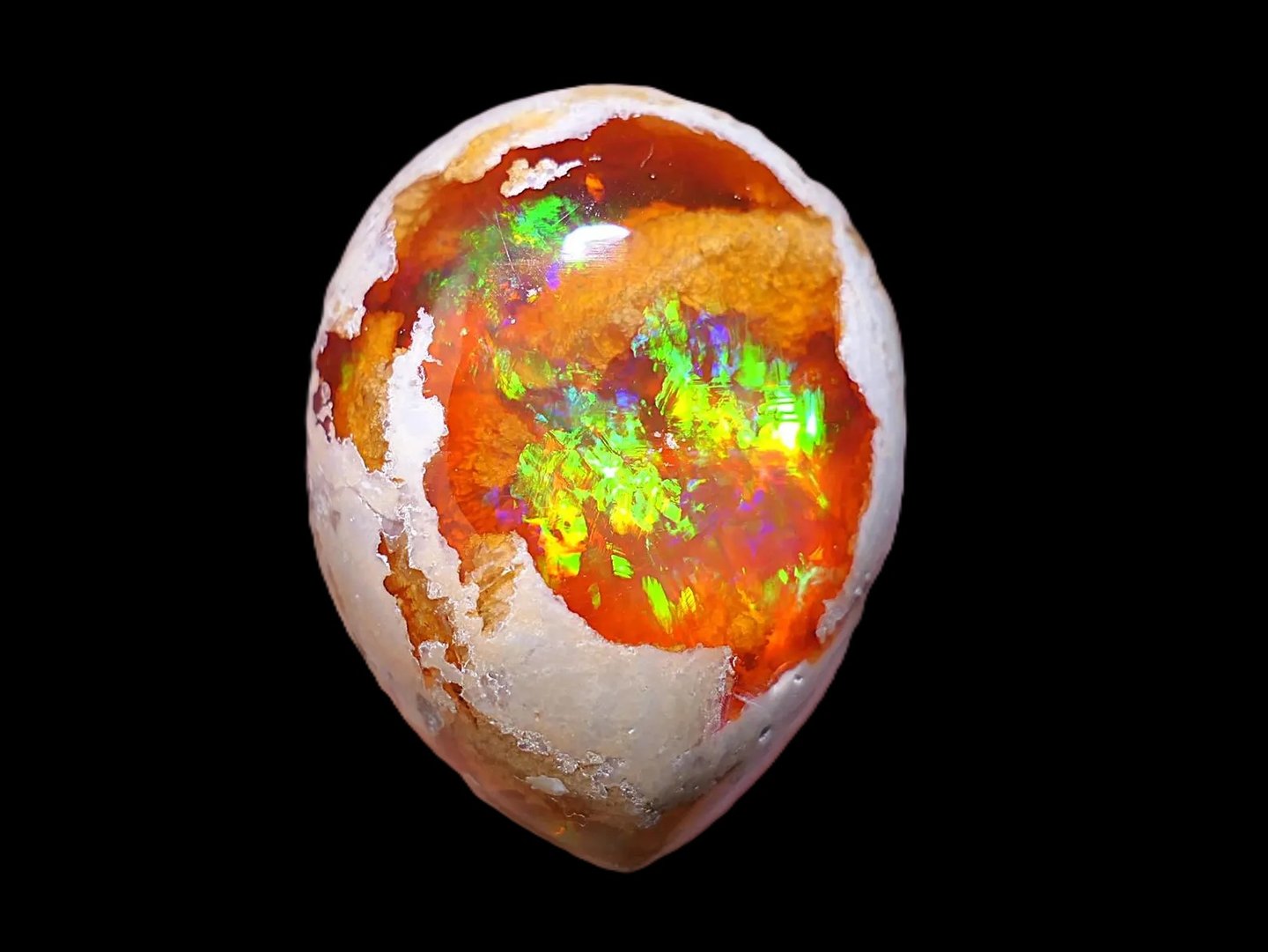
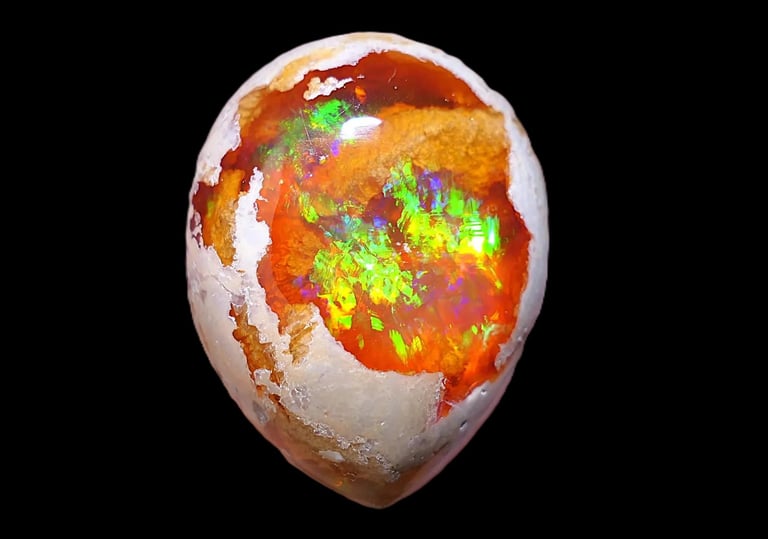
Fire Opal
Unlike the others, this variety is prized for its vivid, warm body colors—ranging from bright yellow and orange to deep cherry red. While some show a play-of-color, most are valued for their transparency and fire-like hue.
Why it forms differently ? Fire Opals are typically Volcanic in origin rather than sedimentary. They form in the cavities of ancient volcanic rock (like Rhyolite). The presence of iron impurities during the high-heat volcanic process provides the characteristic orange-to-red glow.
Crystal Opal
A transparent to semi-transparent variety with no solid body tone. When held to the light, you can see through it, yet it exhibits a brilliant, three-dimensional play-of-color that seems to hang in mid-air.
Why it forms differently ? This occurs when the silica solution is exceptionally pure and free of any surrounding sediment or potch during the cooling process. Without the interference of opaque minerals, the silica spheres organize into a clear, glass-like structure that still diffracts light into a rainbow.